


A larger pack is not automatically a better deal. Use landed cost per unit of net weight, then check storage, handling and how quickly your household actually uses it.
The short answer
Buying cat litter in bulk is worth it when three things are true:
- the final cost per unit of net litter weight is lower;
- your household uses the litter consistently;
- you can store and handle the full order without creating a new problem.
A large discount label is not enough. Shipping, taxes, pack weights, subscription terms and unused stock can change the result.
Compare net weight—not just the number of containers
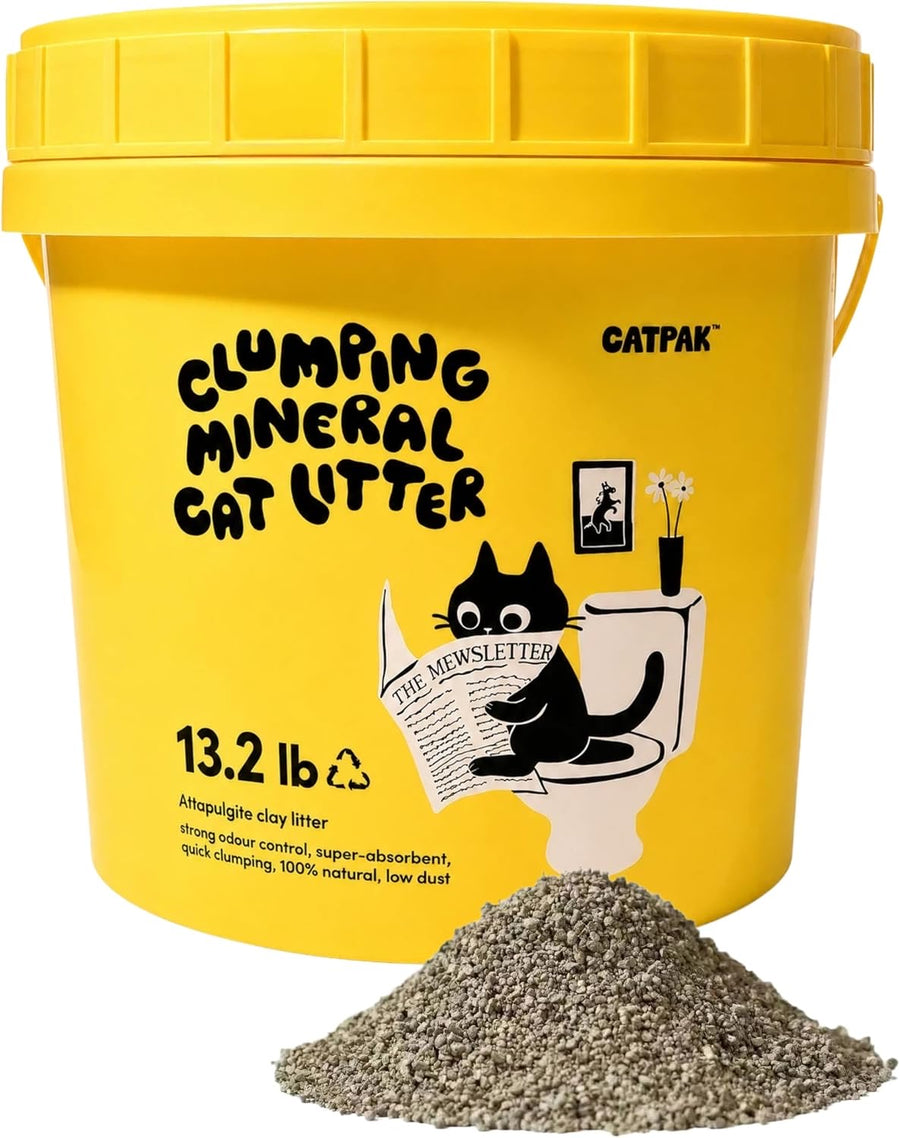
Two packs can contain the same number of tubs or bags but different amounts of litter. Check the net weight on each offer before comparing prices.
Use this calculation:
Landed cost per pound = total checkout cost ÷ total net pounds of litter
“Total checkout cost” means the discounted product price plus shipping, applicable taxes and unavoidable fees. Use the same currency and weight unit for every option. NIST's unit-pricing explanation describes why a consistent unit helps compare similar products.
This works best for different pack sizes of the same litter. Different materials may require different amounts in your routine: a lower price per pound does not prove a lower monthly cost.
For example, the CATPAK US collection, checked September 5, 2026, offers the same litter in 6 kg tubs (about 13.2 lb), with pack sizes from one to six tubs:
- 4 tubs = 24 kg (about 52.9 lb)
- 6 tubs = 36 kg (about 79.4 lb)
These are US examples. Other markets may have different pack weights and options; check the actual offer rather than applying these numbers everywhere.
Because prices and availability can change, use the live CATPAK cat litter collection for the current checkout comparison rather than relying on a price copied into an older blog post.
A worked example, not a CATPAK price offer
Illustrative amounts — not CATPAK prices
Smaller pack
- Net litter weight
- 12 kg
- Checkout total
- US$60
- Cost per kg
- US$5.00
Larger pack
- Net litter weight
- 24 kg
- Checkout total
- US$108
- Cost per kg
- US$4.50
10% less per kg · US$48 more paid today
The example below uses kilograms throughout; the same formula applies. Suppose two packs contain the same litter. These invented checkout totals already include shipping, taxes and fees:
See the calculation table
| Example | Net litter | Final checkout total | Cost per kg |
|---|---|---|---|
| Smaller pack | 12 kg | US$60 | US$5.00 |
| Larger pack | 24 kg | US$108 | US$4.50 |
The larger pack costs 10% less per kilogram, but you pay US$48 more today. It is a useful saving only if you can afford the higher checkout total and will use the extra litter. These figures demonstrate the calculation; they are not current CATPAK prices or promised savings.
Calculate what your household actually uses
Bulk buying is easier to judge when you know your normal use. For 30 days, record the clean, dry litter you take from your supply:
- top-ups into existing boxes;
- fresh litter used for complete changes;
- any one-off first fill for a new box, recorded separately;
- which boxes receive more use, as context for the figures.
Do not add the weight of removed clumps to this total: the replacement litter is already counted in top-ups or full changes, and wet waste includes urine. Count each addition of fresh litter once.
Then estimate:
Months of supply ≈ available clean litter weight ÷ typical monthly use
For illustration, 36 kg available for a stable routine and a measured use of 9 kg per month would cover about four months. The 9 kg is an invented household example, not a CATPAK consumption claim. If you are setting up extra boxes, set aside their initial fill before estimating the remaining supply. A first month with a one-off setup may overstate your usual monthly needs.
Do not copy another household's monthly number. Box size, cleaning routine and number of cats can change what you use. Our multi-cat litter-box guide covers the separate question of how many boxes to provide and where to place them.
If you have not measured your use before, start with a smaller order and establish a baseline first.
Include shipping and promotion conditions
Before calling a bulk pack cheaper, take it all the way to checkout and check:
- shipping cost;
- applicable taxes and unavoidable fees;
- minimum order requirements;
- whether the discount requires a subscription;
- whether the first-order price changes on renewal;
- whether a free item is useful to you or simply inflates the advertised value;
- cancellation and return conditions;
- whether every pack is available in your market.
Compare the normal repeat price if you expect to reorder. A one-time promotion can still be worthwhile, but it should not be mistaken for the long-term cost.
The FTC's subscription guidance recommends checking charges, automatic renewals and cancellation terms before enrolling. This is a buying checklist, not a claim that a particular CATPAK offer includes a subscription or a universal right to return opened litter.
Make sure you can store it properly

A six-tub US example contains 36 kg of litter, plus packaging. Before ordering, choose a storage area that is:
- dry;
- easy to reach during refills;
- away from food preparation;
- not blocking a walkway or exit;
- strong and stable enough for the total weight;
- protected from pets or children opening the containers.
Separate lidded tubs may be easier to distribute across storage locations than one large bag. Their space needs depend on their dimensions and your layout. Measure the storage area and follow the packaging instructions; do not assume a shelf can hold the weight or that tubs can be stacked safely just because they fit.
Consider handling, not only storage
The cheapest pack is not useful if it is difficult for the household to move safely. Ask:
- Can the delivery be left close to the storage area?
- Does anyone need to carry it upstairs?
- Is it easier to move several smaller containers one at a time?
- Can the container be opened, poured and resealed without spilling?
For a multi-cat household, smaller individual containers may also make it easier to keep one near each litter station. That convenience has value even when it does not appear in the price-per-pound calculation.
Avoid buying too much during a transition
Bulk purchasing is a poor first experiment with an unfamiliar litter. Cats can have individual preferences for texture and scent, and a sudden switch can be rejected.
If you are changing products, buy enough for a gradual transition and observe every cat before committing to a larger quantity. Our guide to switching cat litter walks through the transition process.
Bulk is most sensible after your cats have accepted the litter and your household understands the maintenance routine.
Use a simple decision scorecard
Before buying, mark each line yes or no:
| Question | Yes / No |
|---|---|
| Is landed cost per pound lower than my usual order? | |
| Do I know my household's monthly use? | |
| Have all cats already accepted this litter? | |
| Do I have a dry, measured storage space? | |
| Can the household move each container comfortably? | |
| Have I checked renewal, shipping and return terms? |
Resolve any “no” that affects affordability, storage or your cats' acceptance before ordering. A smaller pack may be more practical even when its unit price is slightly higher.
The best bulk order is the one you can actually use
Bulk cat litter can reduce repeat ordering and lower unit cost for a stable multi-cat household. It can also tie up money, occupy valuable space and leave you with a large supply your cats do not want.
Use net weight, landed cost and measured monthly consumption—not the size of the discount badge—to decide. Then check current pack availability in the CATPAK cat litter collection.
Sources & reading notes
Sources and calculation notes
- CATPAK US collection, checked September 5, 2026: current US pack counts and net weights. Prices, stock and other-market packs are not fixed by this article.
- NIST: uniform unit pricing, checked September 5, 2026: comparing prices in consistent units.
- FTC: subscriptions and automatic renewals, checked September 5, 2026: consumer checks before enrolling, not jurisdiction-specific legal advice.
- The US$60/US$108 costs and 9 kg monthly use are illustrative inputs. Replace them with your own checkout and measured use.


